Wednesday, 19 June 2013

Are you Team Mac or Team PC? Blog 132


Good morning!

I have to admit to being in a state of mild euphoria yesterday thanks to the fanfare heralding the end of an intense and stressful few weeks of working on fundraising. So I decided to have a 'play day'. Well mostly that was ok - apart from it was also the day of our Arc Board review conducted in earnest with all our staff in individual interviews. 


Mike Ainsworth - Arc Chair
Our Chair Mike and the 'money man' Graham put us through our paces - asking us to articulate the Arc vision going forward. It was slightly strange for me - as I won't be there soon. Its strange to stop talking about 'we' and begin to hear myself saying 'you'. After almost thirty years - a lifetime I am not going to be part of shaping the next 30 years. So much as I was feeling relieved at a done-and-dusted application the occasion was also tinged with sadness. I am excited about Arc's future and know it can only flourish - but being a control freak means that I struggle a little not to stick my oar in! 

Graham Simmons  - Money Man
I didn't stick it in for long - although the chocolate biscuits that Nita provided for team sustenance were calling to me. I needed to spend some time
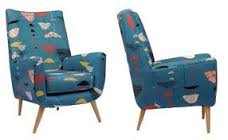
taking delivery of fifities furniture for my new Jasmine Street studio. Old and new serendipitously colliding for me. 

I had also promised to help a colleague do some work on a project and wanted to focus a little bit on that. 

Which brings me to the subject of this post. The divide between the PC and Mac animals - I am very much in the latter camp - we all are at Arc. But my colleague is a PC person (I do love labels! - I am sure they have other redeeming qualities!)  

I am not convinced any of us really knew which camp we were choosing in those early technology adoption periods when David and Goliath fought for our attention! Anyway once a Mac user - always etc.... bit like being a catholic. It was fun to see just how differently the two systems work. Things I take for granted as intuitive on a Mac just didn't work for me on the PC and vice versa for my colleague. So rather than focusing on any content or even functions - we were trying very hard not to get lost in translation.




No guessing which this is?

The conflict between Apple supporters and PC Windows fans still rages on university campuses, social networks and Internet message boards. It's a discussion that invites flame wars. So put on your fireproof britches, i'm going to wade right into it.

Given the passion often displayed by owners of both brands, I was surprised and a little disconcerted to learn what a small share of the global computer market Apple actually controls. While the sales of iPhones, iPods and iPads provide a strong boost to Apple's overall earnings, Macs account for less than 5 percent of computers worldwide. However, the Mac boasts an impressive growth rate.

So, which is better - Mac or PC? (my attempt to be even-handed, I know the real answer!)

If you grew up in the 1980s, the concept of design might seem like a superficial and unimportant aspect of a computer. But design is a big differentiator between Macs and PCs. For the better part of three decades, former Apple CEO Steve Jobs focused on the outward appearance of his company's products with an enthusiasm unmatched by his competitors. The unique designs that resulted from this obsession have given Mac products the "cool" image that they enjoy today.

This unconventional focus on design began with the very first Macintosh, introduced in 1984. Like many of the computers in Apple's current line, its central processing unit and monitor were housed in a single unit, reducing the number of cables necessary for operation and creating a sleeker profile. Perhaps Jobs's and Apple designer Jonathan Ive's most significant success was the iMac, introduced in 1998. With its translucent, primary-coloured shell, this model reversed Apple's flagging fortunes and represented the start of its rise to present-day popularity. Today, some PC manufacturers are attempting to create more design-oriented models, but none have achieved the popular acclaim achieved by Mac products.

On the flip side, PCs don't come from a single manufacturer. There are hundreds of different designs of PCs on the market, ranging from the utilitarian design of most business PCs to the space-age aesthetics of Alienware's gaming PC line of computers. You might find some designs more compelling than Apple's approach, but there's no single vision guiding aesthetic choices when it comes to the design of the PC. That's not necessarily a bad thing - if you don't like one design, you can look to a different manufacturer to consider other options. If you don't like Apple's design, you're out of luck if you absolutely have to own a Mac.

One of the most frequently cited differences between Macs and PCs is price. Few Mac products sell for less than £900 while there are dozens of PC models that fall within that price range. However, this doesn't necessarily mean that Macs are more expensive than PCs with similar specifications. Rather, in general, Apple has chosen to build its Mac line around higher-end computers with better and more costly components.

The problem with comparing prices between Macs and PCs is that the computers are rarely comparable. Even if you did find two computers with the same processor speed, RAM, hard drive capacity, graphics, memory, number of USB ports, and so on, each of them would be preinstalled with vastly different software packages. The user may have to purchase additional software for whatever computer he or she chooses, like a virus programme for a PC or Microsoft Office for a Mac. The bottom line is this: The relative value of a Mac or PC really depends on the consumer's needs. (source - Intel)

If you just need a computer to perform basic functions like internet surfing or word processing, it might be hard to justify buying a Mac. There are plenty of PC choices out there that are less expensive.

Perhaps the most obvious difference between a Mac and a PC is the number of configurations available for each brand. Currently, Apple offers just five computer lines: the MacBook Air, the MacBook Pro, the Mac mini,


the iMac and the Mac Pro. Even if each configuration of these models is counted individually,  at the moment Apple only offers a total of 18 unique computers. This limited selection is not a sign of weakness, but a part of the company's "less is more" approach to marketing.

PCs, on the other hand, come in a wide variety of shapes and sizes. Consumer Reports reviews 11 distinct brands of Windows-based computers, including Acer, Asus, Compaq, Dell, eMachines, Gateway, HP, Lenovo, Samsung, Sony and Toshiba, each offering numerous configurations of desktop and laptop models. Many consumers see this large selection as a benefit because they're more likely to find a computer that meets their exact needs.

When it comes to third-party retail stores Apple is more selective than the PC manufacturers about where it will sell its products. The company's flagship retail outlet is the Apple Store, which first opened its doors in 2001 and since then  has opened more than 300 additional stores in 43 states and 11 countries [source: Apple].

Microsoft has a very different strategy. The company doesn't make hardware -- it licenses its Windows operating system to other companies. Most of those companies push their products into as many shops as they can. So while you might not see an Apple computer in a local computer shop, you'll see dozens of Windows PCs.
The operating system has been a long-standing difference between Mac and PC; currently, Mac computers are preinstalled with OS X Lion, while PCs come with Microsoft Windows 7. Between 2007 and 2009, when Windows was Microsoft's operating system, OSX was widely regarded as the better of the two software packages.

A significant development in this debate occurred in 2006, when Apple announced the release of its Boot Camp software, which allows users to install Windows on their Intel-based Macs. Today, there are many programmess that facilitate the installation of Windows on a Mac. In contrast, you aren't supposed to install Mac OS X on any Windows PC. Getting Mac OS X to work on a non-Apple computer is tricky - they call such machines hackintoshes. They tend to be unstable, and selling them is bound to get you into trouble with Apple.


Apple has worked very hard to craft a fun and cool image for its line of Mac computers, while simultaneously portraying PCs as dull and nerdy. (Would I ever agree with this? Don't get me going- its and ongoing raised voiced issue with my dad - enough to make one of us storm away from the meal table!)

This strategy played out most famously in Apple's recent advertising campaign featuring "Mac," played by the younger, hoodie-wearing Justin Long and "PC," played by the older, bespectacled John Hodgman. But is there actually any truth to these stereotypes?

In April 2011, the Internet was a buzz with the results of a survey on this very topic, conducted by a Web site that makes recommendations based on user preferences. It asked users to identify themselves as a Mac or PC person, and then questioned them about a number of self-identifying factors. The results were comically stereoty
pical.

Early Apple Mac - we had one of these in 1993!
Among the findings were that Mac users were more likely to be liberal, eat hummus and read The Guardian! (que moi?). PC users, on the other hand, were more conservative, had a better grasp on mathematical concepts, and, unlike their Mac counterparts, would rather ride a Harley than a Vespa. While these results are certainly interesting, they can't be taken too seriously - these conclusions were based on an admittedly unscientific survey.

One thing that both Mac and Windows PC fans have in common is passion for the brands themselves. Get a diverse group of computer users together and introduce the subject of Macs versus PCs and watch the sparks fly! Mac users will bring up concepts like security, usability and design. PC owners will counter with price, software compatibility and choice. It can get really ugly really fast (but it's fun to watch).

Probably the most striking difference between Macs and PCs is in customer satisfaction. In the most recent surveys conducted by both PCWorld and PCMag, readers chose Apple computers over every single brand of PC available. Macs scored high marks in categories like reliability, service experience and even phone hold time. The only category in which Mac scored low was percentage of laptops needing repairs. It didn't seem to matter, though, as Mac also topped the category, "likelihood of recommending."

These high rankings are probably due in part to the way that Apple provides service. At a time when many PC manufacturers have shipped their service centers overseas, Mac users can get face-to-face assistance from a technician at the Genius Bar help desk located in any Apple Store.

It also helps that Apple has a centralised identity. If you have a problem with a Mac computer, whether it's the hardware or the operating system, you can go to the Genius Bar. But what happens if your PC is melting down? You might have to speak to two or more companies just to identify the underlying problem.

In the end, the choice of PC or Mac depends upon you more than anything else. Declaring that one is better than the other is like saying oranges are better than - well, you know.

This was a rare technology post from me - don't expect another one soon. This was really enough! So in the end I think I just have to be a little more tolerant with my colleague and keep our vision on the big picture rather than ending up in a scrap! 

Have a good day - PC and Mac users all!


Tuesday, 18 June 2013

Playing at Jasmine Street - Mood Boards and Arc Review. Blog 131

Morning all!


Thanks guys - that did the trick!
I was just responding to a couple of early Arc/Lark emailers - its not just me - honest guv! And thinking about what I would blog about this morning. I'm a bit done over with words actually having been tied to the screen over the past week, trying to birth language for SMART outcomes. I know I have been going on about the application and probably making heavy weather of it. Its just its not my preferred bit of the job, not least as it requires total focus and leaves no space for my natural way of imagining things. But hey ho! I'm not asking for a fanfare (well maybe I am actually).

But I don't have much to say today which may be of surprise to my regular readers! I just want to play today. We do have the big heavies coming into Arc (I like to make Mike - the Chair of my board sound like the Mafia - he's really a pussy cat) today to undertake a 'root and branch' review of the organisation. I keep trying to tell them we ain't got no trees. In all seriousness its a very important day because it will lead to a series of recommendations about how Arc goes forward as an organisation. I am looking forward to the chat. 


The Granary - New Home to Jasmine Street

But I am also going to indulge myself before then with enjoying making my Mood Board for Jasmine Street - I am creating a fifties installation, (theatre set really - Tennesee Williams parties sound fun don't they?) 

So e-baying formica tables and chairs etc, and doing quite well. Its funny how a similar table and chairs can be up there for £600 from a canny (or not so) vintage dealer - or £30 from some one's house clearance. I tend to prefer the latter. So that's me done with words for the next few hours. Have a good one - and here are some of my moody images ...mmm yummy!


Monday, 17 June 2013

Guest Blog Number Two from Tim Major - Director

Hiya - 
Unusual for me to blog in the early evening - doesn't feel quite right. So its a good job this is simply an introduction to my guest blogger Tim Major. This is the second blog post he has written for me - and I am very grateful. Not least today as I reluctantly substituted my early blog time to finally finish the huge application for just under £200k. Procrastination and a poorly dad have been my betes noirs on this one. However now its finally gone, finito, out the window, skidaddled, left -  Hurrah. We will of course be delighted if it comes back in a money sack. Watch this space.

So it is with great pleasure that I offer you the delights of Mr Major below. In all seriousness I was extremely pleased and touched to receive this by email today. Its Tim's thoughtful take on the whole cleaving-leaving continuum and chimes loudly for me - suspect it might for you too.


Tim complained last time that his photo was too old - so  I thought I would google another one - see what I found! Sure he will be delighted!
Following on from your last two days blogs ....

As a young person I was involved in a number of pantomimes at an arts centre in Aylesbury, Queens Park Centre. 


They were amateur shows, by which I ean we were not paid to take part, but the standard was extremely high in terms of attitude and care about the product. The scenery and scenic art was created in house by the centre's then AD, Malcolm Thackeray, a man of great vision and talent. 

The Limelight (the centre's theatre space) is a small venue. The centre itself is in a converted victorian school building and consequently the theatre space, the old school hall, is challenging. Indeed it only has a stage left wing and entrance from SR can only happen from behind the cyc upstage right. (cyclorama, in theatre, background device employed to cover the back and sometimes the sides of the stage and used with special lighting to create the illusion of sky, open space, or great distance at the rear of the stage setting. -Editor)


Best pic I could find of the Limelight Interior

As such the sets had to be ingeniously designed andbuilt to allow the complete magic of these shows come to life fully. Always as part of Malcolm's designs, the aforementioned cyc would have a relevant design painted on to it. From memory Malcolm had trained as a fine artist, certainly he can paint! These designs were works if art in their own right. 

The shows were always magical and wonderful to do. One was always left with classic 'after show blues'. My memories of those shows are nothing but fond and the experience very formative. 


The point here however is: 

After the run of one of the shows had finished, and whilst in the midst of these after show blues, I found myself back at the centre ( we used it as a bit of a second home!) and I found Malcolm unceremoniously whitewashing his design painted on the cyc as part of the process of returning the space to a blank canvas. 

The experience of the show had of course given me ownership of everything to do with it but even with the arrogance of youth I knew better than to berate him for ruining the work of art. 

I did however suggest to him that it must be heart breaking for him to have to destroy his work. He paused to relight the roll up that was always perched between his lips and said matter of factly, 'not at all. It just means I can paint something new. '

I am certain this exchange meant nothing to Malcolm and was forgotten immediately. For me it was a profound lesson that I've tried to retain and implement. 


It's not the sadness of what is over but the joy and excitement of what is to come. 
This isn't anyone I know
Thanks for this Tim - and for getting me out of a hole for missing my blog today! You are rather a star.


Sunday, 16 June 2013

Non-Attachment, Benefits and Challenges. Blog 130


Namaste!


Yesterday was a strange day for me - normal in lots of ways but extraordinary in others. My new little Polish friends, Veronika and Pauline (9 yrs old) were waiting patiently by my patio yesterday morning at 9am. We had only become firm friends the day before when they came to tell me that they liked my little patio garden - full as it is of flowers. They also expressed a worry that I might be lonely on my own! I disavowed them of this. Veronika was particularly insightful. Sitting on her bike and talking to me about being Polish in Barking, the perils of homelessness (she has just learnt about this at school), the unkindness of racism and the importance of good friends. She basically knows most things about life, and is a little acorn. She is also hugely resilient, and explained to me that she doesn't accept it when other children tell her to go home to Poland. She stands up to them and tells them that they are being unkind. I love her breathtaking assuredness.  She told me she wanted to be my friend. I liked that a lot. I gave her and Pauline some biscuits (checking first with their mum) and they offered to come in and help me with my washing up! I declined the latter for the moment. Later.I shared some stories with the girls from my childhood and we had great fun together. 

I was struck again by the wonders of real connection - so easy with these little girls. This alongside many emails, messages and phone calls to me following my leaving Arc blog of yesterday. I have to admit to having felt a profound emptiness - a stillness and peace which was essentially good - all the more to have space for new imaginings. 
I was deeply touched and moved by the generosity, thoughtfulness and kindness of my flow of messages. People do really care about each other and I saw the best of that yesterday. It led me to think about leavings and detachment. The messages varied enormously and were all heartfelt. I suspect as well as thinking kindly of me, and imagining my personal challenge of leaving Arc, perhaps more importantly my experience offered an opportunity for others to consider their own losses and leavings. I am pleased if it was useful in any way. In the light of someone else's 'stuff', we more often than not project our own feelings and thoughts. We ask ourselves searching questions 'Would I do that?', 'Are they making a big mistake?', 'What if it all goes wrong and there's no going back?, etc; etc; All good questions in which we can substitute our own narratives at the same time as having care and empathy for the well being of the other. 

And that brings me to the notion of attachment. Its something that has exercised people for all time and which I have always found compelling to think about. Buddism states it simply

‘Attachment is the origin, the root of suffering; hence it is the cause of suffering.’


I believe that we are saturated with messages about the wholesomeness - indeed necessity for attachment, particularly in families and organisations, where sadly it can so often breed an unhealthy codependency. And in my view the truth lives in the ability to hold two opposing ideas simultaneously - ie; to avoid black and white thinking. If 'such and such is true than the opposite cannot be' is a trip up a cul-de-sac. Tolerating opposing views or ideas requires us to synthesise. Not always easy, especially when hot emotions appear. How can it be that the Israelis and the Palestinians both hold essential truths that sit alongside each other and yet cause colossal pain and conflict? 

Now here's the thing. Children absolutely need to attach to their caregivers to survive, if they don't have this by the time they are three (Bowlby's attachment theory -http://psycnet.apa.org/?fa=main.doiLanding&doi=10.1037/0012-1649.28.5.759) Bowlby argues that they will lack the necessary foundations for healthy growth into individuated adulthood.

What seems to happen so often though is that attachment goes on well beyond childhood. We see it in the 30 year olds that still live in their parental home. We are at risk of infantilising a whole generation through the well intentioned trend to be 'child centred'. I'm not arguing with that idea fundamentally however - if by this we mean an understanding that children need security and attachment precisely in order to be released from it by 18 at the very latest. 

The Jewish faith has always understood this and put in place the highly sacred ceremonies of Bat Mitzvah and Bar Mitzvah. According to Jewish law 


when
boys become 13, they become accountable for their actions and become a Bar Mitzvah. Traditionally, a Bat Mitzvah occurs when Jewish girls become 12, and it means the same as it does for boys.  The age of B'nai Mitzvah was selected because it roughly coincides with physical puberty. Prior to a child reaching Bar or Bat Mitzvah, the child's parents hold the responsibility for the child's actions. After this age, children bear their own responsibility for Jewish ritual law, tradition and ethics and are able to participate in all areas of Jewish community life.

This is supremely sensible and practical and enshrines the importance of well boundaried personal responsibility which in turn can innoculate against the toxins of dependency and attachment.

Detachment is often also a loaded word - implying that if we are detached we are by definition uncaring and unemotional. My belief is that this is a corruption of the meaning. Empathy, compassion, un-demanded unconditional love all raise us up as individuals, families and communities. They allow us to be free to fully actualise ourselves and therefore to engage much more meaningfully in adult relationships without exerting fear induced controls. 

So I recognise that whilst there is a certain sadness, even grief at letting go of Arc - there is also a delightful and peaceful detachment, which means I can step away and at the same time look on fondly.

Enough for this morning -
Have a good Sunday. 


Saturday, 15 June 2013

Saying Goodbye To My Beloved Arc and Moving on. Blog 129


Me in 1984 when we started Arc
Good morning on this bright Saturday morning! and happy birthday to my dear old Dad! 83 today - and still going strong after your little brush with the grim reaper last week. Pleased you are still here - really pleased!

So this is the big blog. I have returned from my virtual blog holiday in Mexico. It was lovely thank you!

In truth this holiday was a little strategic, because it came in a week when my focus and concentration was on completing a bid for just under £200,000 for Arc's Young Women's Programme -Raised Voices which if all goes well will be brilliantly realised by the talented Natalie Smith. Fingers crossed Nat! 

I was also silent here (although not on other social media platforms I am reliably informed!) because it was the week in which I finally tendered my resignation to the Chair of the Arc Theatre Board of management. About four weeks ago I decided that it was time for me to move on from Arc. It was a very grief filled and difficult decision - in a way akin to ripping off a limb. 


Olly
Olly and I founded Arc in 1984 and it has been our baby and joint creative vessel for 29 years. And its been a wonderful ship to travel in, with unexpected joys, huge challenges, many fabulous creative partners on the way (you all know who you are!) and ultimately a life that I hope will travel forward way beyond me. I have no doubt about that actually. Arc is made up of fantastically dedicated people and always has been. 


Me in 2002
Nita Bocking
The Pre-Raphaelite Theresa
Josh Cass - Thinking  - I think?
The unsung heroine of much of our success and my dear friend is Nita Bocking. As our General Manager for over 20 years she has been my confidante, critical friend, hand holder and has made me
Natalie
laugh a lot even in times of challenge! Thanks Nita. And to Olly of course, a wonderful artistic partnership that has allowed us both to grow as artists and I know that our artistic paths will pass again many times in the future. I look forward to that. And to Theresa, Natalie and Josh the Arc lieutenants - thank you for your relentless commitment, creativity and also your generous faith in me, your putting up with my extravagances and many moments of uncertainty. 


Phil
As well as saying goodbye! I would also like to welcome to Phil Gostelow to Arc as Associate Director of Music. Our collaboration over the past year has taught me a great deal and I have loved every moment of it. The great work that Phil and Olly are doing as their new composing duo Oliver and Gostelow promises great things for musical theatre. Watch this space - and look out for how they do on June 23rd in the semi-final for the Twitter Search for a composer competition.

You are a solid, creative and clever team and I know you will take Arc forward in ways I could never imagine. Good luck. And of course a huge thank you to my wonderful Board of Management - our Chair Mike and our dedicated Board team - Graham, Sid, Sarah, Yvette, Colleen, Dolores, Shamus, Bill, Tony. And our Arc Associate Artistic Director - Joss Bennathan and to our associates, Dani, Thierry, Andy, Grace, Pradeep and Dean. And of course our wonderful Patrons - Neville Lawrence and Jon Snow. Thank you. (starting to feel like an Oscars speech  - apologies!)

And also a goodbye and thank you to all my friends and colleagues in Barking and Dagenham who have supported our work at Arc for nearly 29 years - to Anne Bristow, Paul Hogan, Helen Jenner, Darren Rodwell, Nigel Sagar, Julie Spencer, Carl Blackburn, Cameron Geddes, Graham Letchford, Joan Brandon, Dee Smith, Glynis Rogers, Richard Goodwin, Andy Ewing, Jeanne Alexander, Tony Ramsay, John Middleton, S3A and so many more.


And the most important thank you left to last - to my beautiful long-suffering, kind and talented daughters - Grace and Phoebe, certainly my most lasting, fulfilling and love filled creative project! You are two wonderful and sassy young women and I love you eternally.

Me - Proud of Arc - Feb 2013

As for me - I will be a good neighbour - and even lend you a cup of sugar if you run out. Yesterday I got the keys to my new studio next door to the Malthouse at the Granary. My fledgling little solo company Jasmine Street got to take her first steps there yesterday! She is a bit nervous but ultimately really rather excited. I might have to wipe her sweated brow over the next few months from time to time probably. 


The Granary - Barking

Jasmine Street is a modest little solo project - a wrapper for my creative work and ideas - a Creative Laboratory/Ideas Factory. Its a place and a person and I look forward to inviting artists and collaborators into the street at the Granary to have a creative conversation, a cup of tea and dream up some new ideas! 


I am delighted that Jasmine Street will play her part in the future development of the Abbey Road Cultural Industries Quarter and I am very excited to be able to continue my work with Steve Drury (Development Director- Rooff - owners of the Malthouse and the Granary) and regeneration and arts leaders from Barking and Dagenham Council. 

And also and just as importantly Jasmine Street will be developing her international portfolio of commissions and plans to bring some of them home to Barking, starting with the visit in August of ARKA Teatr from Wroclaw in Poland. My soul home land.


So there you have it - bit emotional I must admit! But mostly excited and looking forward to the next bit of my personal and artistic journey.
Me - June 2013

Thanks to all those who have helped me to get here - you know who you are.

Have a lovely Saturday! 


Tuesday, 11 June 2013

Blog Holiday; Virtual Mexico - Tulum


Morning!

Signing out now for a couple of days for my periodic blog holiday. Mexico this time I think. Haven't been there for over 25 years -

Think I will retrace my steps with a stopover at Tulum where I haven't been since 1983! (Yucatec Tulu'um) is the site of a Pre-Columbian walled city serving as a major port for Coba The ruins are situated on 12-metre (39 ft) tall cliffs, along the east coast of the Yucatan Peninsula on the Carribbean sea in the state of  Quintana Roo, Mexico. Tulum was one of the last cities inhabited and built by the Mayas; it was at its height between the 13th and 15th centuries and managed to survive about 70 years after the Spanish began occupying Mexico. Old World diseases brought by the Spanish settlers appear to have been the cause of its demise. Tulum is one of the best-preserved coastal Maya sites and it has a real energy about it.

So off there now on my virtual trip - see you in a couple of days! 


MM - very nice.


Monday, 10 June 2013

Sadness, Joy and the Curse of DSM-5. Blog 128

Good morning morning!

Ok - so we are a bit older than these two! 
I spent a wonderfully convivial evening with a dear friend - a fellow traveller for over 25 years. I cooked and we ate and talked. We shared stuff in the way you do with old friends, with the trust that comes from years of confidences and love. Its the kind of relationship where you can explore the things that make you who you are without fear of being closed down. You can visit each other's cores. Conversation never runs out but you can be silent together too. Such is the quality of this friendship. And I am blessed to have a number of these. 

Someone once said to me that I am supremely intense and very analytical for an artist! I am not sure that it was meant as a compliment - he being a scientist and of the opinion that analysis is the sole territory of fine scientific minds. It made me laugh out loud I remember. This stereotype persists, with the belief of some that artists are by definition flaky and odd, not of the real world and deeply irrational. Apparently we live in garrets, were latterly prone to consumption are often narcissistic and even mentally unwell. The likes of Sylvia Plath, Nick Drake, Sarah Kane, Glen Gould all pointing to a reinforcement of this. 

We like to think that artists are somehow different from normal human beings, and some even buy into and pedal this as a badge. Take Stephen Fry for example - I adore the man, but his public demonstration of his apparent manic depression, now fashionably renamed Bipolar bothers me. Its not that I disbelieve his belief - indeed many would argue that his self exposure normalises mental illness in that a man of his intellect, creativity, productivity and stature is a sufferer of this Black Dog. More than that some would say it gives comfort to those who daily suffer the discrimination and indignity of mental illness. I'm not so convinced. The romanticism bugs me. Dealing with deep human distress is no picnic for anyone. I know, prone as I have been all my life to periods of profound sadness. But almost everyone I know has such times, isn't it just part of being human? I guess it becomes pathologised and then the drugs


companies rub their hands together with glee - more pills, more profit. And so the cycle goes with the DSM-5 (Diagnostic and Statistical Manual of Mental Disorders) adding new 'conditions' almost daily. The lastest one published this May revises its definition of gender identity issues (ah politics!) and adds Gambling Disorder! Dear God, is all human experience now to become treatable by a drug?  I am sorry but it makes me mad (haha!) to consider the supposition that all human distress can be magicked away by simplistic and lazy thinking and a few pills. Why isn't it ok to be sad? its just there in the emotional palette of human beings isn't it - a natural companion of joy, love and anger surely? 


Makes us uncomfortable?
I am not diminishing real emotional and mental anguish, I have seen it debilitate people, myself included at times. I have also recently spent quite some time with a woman who is 'schizophrenic' and indeed her behaviours are well outside the norms of social behaviour. She has several competing voices and speaks in them most of the time. But even she, who is certainly categorised as mentally ill  still lives a manageable life, takes care of her ailing mother, has children, cooks, goes shopping, laughs and cries. 

I know that many doctors are well meaning, caring, deeply serious and committed to making people well. But the funny thing is that unlike any other disease - these illnesses of the mind cannot be easily confirmed by a trusty old blood test. Diagnosis is largely subjective, and based on the patient's self reporting or in some cases that of their relatives and the essential ingredient of course -  the 'expertise' of the physician. I believe that by definition these illnesses are indeed dis-ease. They are a manifestation of human beings struggling with being alive, with life itself even. Life is not in our control and yet we try to make it so. 

I am 350 pages into writing a novel with a narrative which at times touches this territory. I was recently asked by a good friend and artist to share a fragment of it - she wanted to get a sense of the style, tone and rhythm of what she called the mental state of 'rumination' for a piece of drama she is making. My central character Bernadette could be said to ruminate - but I had no idea that this is now a categorisable symptom of a mood disorder! I thought rumination was a proper process of considering and thinking deeply about something. A plausible dictionary definition is this:

1. The act of pondering; meditation.
2. The act or process of chewing cud.

If rumination is a symptom now of a mental illness than all great thinkers and mystics throughout history are bonkers by definition! Why is it so unfashionable to ponder the great questions of life and existence? Unless of course like Stephen Fry you are an eccentric artist - in which case its allowable and inhabits its own 'safe' box at a distance from real people.

Sadness, joy, love, anger, birth, sex, envy travel us through the emotional and spiritual spectrum of our lives. That's why poetry, music, film, drama, painting take us deep into those places in which we all actually live, like it or not. No pap TV opium of the masses can hold back those moments in our lives when all things change or we are struck by illness or loss. We cannot Costacoffee them away - can we? I suppose if we want to choose a life of mildly sedated ease then why not? It could be worse - we could love, lose, rage, live truthfully and joyfully. Or not. 

So on a bit of a rant myself this morning! But there you have it. A nice cup of 'real' coffee and listening to some Nick Drake should sort that in no time!

Have a lovely day - and maybe just let life carry you forward. I plan to.