Monday, 21 January 2013

My Heroes in Theatre - Peter Brook: Blog 16

Peter Brook


Hi All,

Following my tales about Poland and the theatre director Grotowski on Saturday, I turned my thoughts again to another theatre director hero of mine, Peter Brook. 

I wrote about him on post 53B of my Cinderella blog. I was also completing a submission for a commission for an exciting new theatre piece yesterday and the brief asked unusually for examples of three influences on your work. 

So inevitably I had to cite Peter Brook. He's a source I frequently return to, his book The Empty Space being a bible of sorts.

Peter Brook has lived and worked in Paris for over 40 years, finding the french temperament more conducive to his way of working. But in early 2011 the 85 year old director who continues to work with huge vision and energy stepped down from his his 36-year tenure at the experimental Bouffes du Nord theatre in Paris.

At that time Tom Piper, the Royal Shakespeare Company designer who worked with Brook in the early 1990s said of him "He got a very international audience there and French audiences appreciated it. He is amazingly charismatic and so he gets amazing things out of people."

When Brook announced four years ago that he would gradually step down from the Bouffes, he spoke of a conviction he shared with his young collaborators Poubelle and Mantei that "opera, popular music, theatre and dance can be married in a single spectacle in order to invent new forms".

Brook has produced ground-breaking shows in French, including La Tragedie de Carmen; the epic Indian poem The Mahabharata; and, more recently, Tierno Bokar, a Sufi tale from Mali.  Recently 
Brook, who was born in west London to Russian-Latvian émigrés, admitted he sometimes missed the English language.

He began what many have seen as a creative exile in Paris after enjoying British success in 1970 with RSC productions of Marat/Sadeand the anti-Vietnam play US, and finally with A Midsummer Night's Dream, starring Frances de la Tour and Ben Kingsley. 

His guiding principle, regarded as startling at the time, was that the stage should be left uncluttered so the imagination could work. As I mentioned The Empty Space was probably the single most influential book I read at university and to which I regularly return to remind me of the guiding principles I have been so hugely influenced by. 

In it he sets out the idea that the audience is central to the atmosphere of a piece. Elaborate sets, according to this theory, just divide the actors from the public.

Brook's revolutionary methods were always fluid, however with decisions  never fully final. Tom Piper recalled "When we were rehearsing La Tempête in Paris, we brought a whole load of earth into the theatre for a week before we decided it wasn't right. In the end we went with a patch of sand and a single rock. We had an orange box which became a boat and was then worn on Ariel's head. This became the image on the poster, but it had all come from rehearsal."

Brook's 1963 film of Lord of the Flies is still thought of as a classic, but the poor reception in Britain of a 1978 stage production of Antony and Cleopatra, starring Alan Howard and Glenda Jackson, heralded a long period of work at the dilapidated former variety venue in Paris. 
Brook's productions only came to Britain intermittently.

Tom Piper also said "The British establishment is difficult for him, It is a shame we have never found the way to get him to come back permanently to Britain. He has become a special event when he comes back and perhaps that helps him to have a bigger impact."

Brook's pared style – with a stripped stage and minimal props – is so pervasive as to be mainstream now, but the director always worked at the Bouffes as if he were struggling in a start-up venture. According to Tom Piper "In my time he ran just a skeleton staff there. If you wanted to take anything anywhere, you had to hire a van. It was like working in a fringe theatre."  There is a powerful resonance there for me.

Brook's innovative thinking has been reflected in the shape of the new Royal Shakespeare Theatre at Stratford. "We have a stage that thrusts out and the audience is wrapped around it. We wanted to put the actor right at the heart of it. It is about preserving the past too, but we wanted to be playful. You have to keep the character and the ghosts of a theatre," said Piper.

Brook does not want his successors at the Bouffes to feel compelled to follow his rules. "The first thing I wanted to establish – having spent all my life fighting against tradition – was to avoid [appointing] a successor who would have to try and prove my line."


BROOK'S TRIUMPHS

1981 La Tragédie de Carmen, after Prosper Mérimée, libretto by Henri Meilhac and Ludovic Halévy

A radical reworking of the Bizet opera taking it closer to the dark themes of the original novel.
1981 La Cerisaie, by Anton Chekhov

A version of The Cherry Orchard in which the faded grandeur of Chekhov's country estate setting has been stripped away from the first.

1985: The Mahabharata

A nine-hour version of the epic Indian poem that was created by Brook for the Avignon festival. It tells of the clash between two warring families and between good and evil.
1990 La Tempête, by William Shakespeare, in an adaptation Jean-Claude Carrière

Shakespeare's desert island was represented by a rectangle of sand and a rock. A wooden crate represented the wrecked boat.


Article Source: The Guardian


Header image courtesy Williams, D. ed. (1992) Peter Brook and the Mahabharata: Critical Perspectives. London: Routledge

The Empty Space by Peter Brook is available on Amazon http://www.amazon.co.uk/Empty-Space-Penguin-Modern-Classics

I highly recommend a read!


Brooke's 1970 RSC production of Midsummer Night's Dream


Peter Brook with Romane Bohringer -rehearsal of The Tempest in 1991 in Avignon. 
Photograph: Georges Gobet/AFP/Getty Images


Sunday, 20 January 2013

The Obsession and the Selfish Act of Making Theatre: Blog 15


Morning!

Coffee and cold fingers again! 

Arc has always been an artistic community, many have called it a family. Yesterday I was chatting to a friend about this and she said that when she came to the panto the first thing that struck her was that the team of 60 people felt like a family. She's a consultant paediatrician and she thoughtfully reflected that its not something she expects of her profession. Individual doctors work largely alone, they have case conferences and team meetings, but work and personal life stay pretty much separate. She was curious about the seemingly essential need to create a temporary family in collective artistic endeavour like putting a show together. She observed that just the hours spent doing this together by necessity creates a bond like none other and recognised that it was something particular to a shared creative process.

And she's right. From my own experience of making theatre for a long time, it takes a special kind of real family at home who can make space for this. When I am in full swing of making a piece, most everything else is eclipsed for that short time. The every day chores of living get done, but many less important things may get left until the show is over. If your loved ones have to put up with your temporary absence, your infatuation with the work you are making, its a tall order. Its like you disappear and they lose you for a period. They may even wonder if you will ever return. Living with those of us who engage with the madness of creating theatre requires a level of tolerance that is a hell of a lot to ask of them. 

But there really is not much middle ground sadly. Its everything or nothing if you want to make it the best work you have ever made. Its simply not possible to do it 9-5. Even if you are able to squeeze the creative process into 8 hours a day, its so all consuming that you don't and can't switch off. In fact its not even a question of don't and can't its that you don't want to. That's harsh.

The piece you are making is like a pregnancy, its there all the time, in your dreams and in the ordinary things you are doing. That's of course because it inhabits your soul, your heart and your imagination. Whether you are walking the dog, having a bath or eating out with friends and family, its there all the time. It obsesses you and you likely become a total bore if you do talk about it too much. And the other thing that happens in my experience is that you temporarily lose interest in other things too. This can be dreadful for your family. Mine have been amazing through the years, acknowledging that 'she is in that place, and when its done she will come back.' They support me by the little things they do. And I wouldn't have been able to dedicate myself 24/7 if that were not the case. Of course when my kids were small the demands were tougher. The homework still needed to be checked, and more than that the time needed to be there for the emotional and practical support my children needed from me. And to be there just as a family doing family things. I think I managed to do it most of the time. But I know there were casualties on the way when they may have felt that I wasn't there for them fully.

It sounds romantic, the artistic drive taking over etc; but you know its really not at all. I think for those closest to it, its easy to experience it as an act of selfishness and self-absorption. If you are absent from your family in this way, even if you are physically there, its like you have broken your deal with them. No wonder people would frown at that. Indeed if you are a woman, this is even more the case. You are veering away from the expected norms. 

Being outside expected norms isn't a comfortable place to live. You lay yourself open for all sorts of accusations, which is understandable. You are not there for the people who need you, and worse you appear to be there for those you are creating with and hardly know. Of course they will come and go. Relationships may flourish that lead to new artistic projects, but that's never a given. It may or may not happen. But for the time of the making, thats the unwritten contract. And because you are spending every waking moment (and dreaming moment) in that place, its true that you give attention to other people's well-being in the process. You have to or you won't get to the destination. And I don't mean that cynically, its just how it is. That's why I am grateful for the understanding from my own family over the years.

Most people involved in making a piece get that - indeed many talk about how their other halves or families feel excluded. However much we try to pace ourselves and be sensitive to this - its probably never enough. Its not usually that they want more of you- just some part of you to be present with them. 

This is how it has always been for me. I think its why I chose to marry another artist. When you are both in the process together and indeed sharing it with many others its wonderful. But sometimes when you are going it alone it can be bleak for your partner and worse still you may not even notice. The sensitivity thermometer can go unwittingly AWOL.

Not quite sure why this has been the focus for today's blog - maybe my chat with my friend. But also a reflection on the process from which I have just emerged and the inevitable loss of that temporary family, which was never any more or less than that. A group of different individuals who came together with a shared purpose. Once that purpose has been achieved, the bonds loosen and we all move on. Yes its sad, but its making theatre. We still talk, communicate, reminisce a little, but lives go on and new things take over. Its normal and healthy.

Curiously too, within a few weeks of letting go its easier to be objective. To see it for what it is. When I am making new work, I have to believe it to be the best thing I have ever done, a full expression and realisation of an idea or an image. I have to fall in love with it, or I would never keep up with it!  But then as it passes you see that it was simply what it was, another flawed piece of work with magical moments. It is never perfect. It can't be. Its not the best thing you will ever make. You fall out of love with it in a way, still respect it hugely, but put it away. And then you move your gaze away and onto the next idea or piece that captures your heart and soul, and the cycle begins again. In the interim, things return to normal and its more possible to live a 9-5 day again. In fact you need to, to restore your equilibrium.

This is how it is for me, and I can't speak for others but in my experience I suspect it is too. We are not easy to live with! 

Have a lovely Sunday.


Saturday, 19 January 2013

Frozen Poland, Military State of War, Triple Action Theatre 1981: Blog 14


Good morning,

The snowy blanket outside the French windows takes me back a long way to 1981 and the time I spent working with Triple Action Theatre in Wroclaw in Poland.

One of the joys of blogging is that you can go with whatever comes into your mind on any particular day. Unlike a proper biography or directing/acting manual it doesn't have to be in chronological sequence. Its more of a kaleidoscope. 

So my thoughts are drawn to my journey across Europe in that frozen winter of '81. Triple Action was a typical theatre company in the eighties. Eight of us packed into a big blue Mercedes van, full of set, costumes and our rucksacks. The van was ten years old and the heating didn't work. So it was sweltering in the heat and unbearably cold at the other extreme.

I had just left Exeter University, where I had completed my degree in Drama. So this was to be an extraordinary adventure. I had auditioned and been accepted into the company, well known for its physical theatre and eastern european influences. So we took off enthusiastically on our quest to perform the current show we had made (an adaptation of Ulysses by James Joyce in which I played Molly Bloom)  on the other side of the Berlin wall.

One of our actors was Polish and we were bound for his home town of Wroclaw where his elderly mother still lived.

To save money we drove through the nights, with people taking it in turns to drive the monster van. I didn't drive so managed to miss out on that dubious pleasure! But I did speak languages and naively thought that I could help out in any necessary translating, particularly in german.


Passing through the East German border at Helmstedt–Marienborn seemed to offer an opportunity to use my german to build a fast rapport with the scary East German border guards.


Well that was a serious mistake! Once the very young  guard realised I could speak german it made him escalate his demands. With a rifle pointed at me he instructed me to tell my colleagues to empty the van of everything, to take off the wheels and to open the bonnet. We quietly and dutifully obeyed and piled up all our stuff on the snow covered ground next to the van. 

The guard called another one of his number and they used their rifles to pick through our things. They couldn't understand who we were and what we were here for. I dug myself even deeper into the widening hole by attempting to explain that we were a theatre company on a 24 hour transit visa heading for Poland. They picked up some of our costumes and laughed boyishly. I did wonder if they would confiscate them and the set. But the only things they took were some boxes of cigarettes and some food. After about 20 minutes they seemed to get bored of the novelty we presented and looked behind us to new victims. It took us about half an hour to quickly repack the van and we were waved through. 

We were all very shaky and the van was silent for about an hour as we slowly drove on and into East Germany. It was really only when we could no longer resist commenting on the huge change in the landscape that we relaxed a bit and were able to talk. Thankfully no one commented on my earlier eagerness to communicate with the guard, and I didn't mention it again. 

We drove for another eight hours or so, not stopping other than for a pee on the side of the road and a share of the one large bottle of water that we had left. 

Crossing into Poland raised spirits, especially as we had no problem at the border and I kept my mouth firmly closed this time! The drivers were getting tired and so we stopped to sleep for a couple of hours just outside Wroclaw. Maciej, our polish actor started to stir as he recognised the route and started pointing out landmarks to us.

I haven't yet mentioned the extremely important political event that had just happened in Poland. On December 12 1980 the military took power in Poland. Never before had this happened in a socialist country. The implications for the Left were drastic.

The assumption of power on December 13 by General Jaruzelski and his Military Council of National Salvation brutally ended the process of democratic socialist renewal initiated by the workers’ struggles of August 1980 and approved by the Polish United Workers’ Party congress that summer.

For the first time since December 1970, the Polish army shed the blood of Polish workers. Trade union activities and democratic rights were suspended. Free movement and communications were restricted. Thousands of members of a legal trade union, Solidarity, were held prisoner without trial; others were threatened with dismissal from their jobs if they refused to sign a document renouncing the union. Tens of thousands were charged under martial law regulations, especially for exercising the right to strike; some were sentenced to years of imprisonment on this count.


So it was with trepidation that we drove into an early snowy dawn in Wroclaw on January 16th. As the density of buildings appeared so did the sight of hundreds of people queueing outside shops for bread. It was 4am and as we drove towards the area where Maciej's mother lived, he suddenly shouted very loudly to Mark, the driver to stop the van. Unbelievably he had spotted his mother in a queue. Everyone held their breath, unsure what he would do. The van pulled up for a moment and then he told Mark to drive on. Maciej's face was drained and he was shivering uncontrollably.

In silence we made our way to the Monopole Hotel in the centre of the town, where we had our rooms booked for the week. We unloaded the van in silence and walked into the opulent hotel, reserved for westerners. When I say opulent, I mean once opulent. Now the wear and tear really showed through the red velvet curtains and chairs, but there was a desperate look on the face of the concierge as he attempted the semblance of civility for our sake.

After we had each taken a welcome break in our rooms and I had attempted to take a shower which spewed out red rusty water, we gathered for breakfast in the virtually empty dining room. 

There was plenty of food there, for a price of course. We eat hungrily as we hadn't had any food for 12 hours. It was like being in a parallel universe. From behind the large dirty windows of the dining room we could just see out into the street. And we could see lots of people walking quickly past, with no glance at us. Maciej said he guessed that they were all heading for the ration stations, which he thought closed at 7am. 

The rest of that day was spent meeting our hosts secretly at the Actors club and planning for the performances we had agreed to do. 

That evening as we sat still in the Actors club, someone asked about food and the owner of the club shrugged kindly and indicated an empty counter. All he had to offer us were pickled eggs and herrings and for a price paid in dollars, as much illegal Spiritus (95% alcohol - actually "ethanol based gasoline octane rectifier") type of vodka. He wanted to be the host and we appreciated that so  everyone dug into the eggs and herrings and knocked back the Spiritus. I really couldn't keep up with the boys (I was the only girl!) and ended up watering a dying parlour palm, which I imagine finally did give up the ghost!

That night I slept fitfully wondering what on earth the next day could possibly hold, and whether we were really going to perform our show in this hell.........?

I will pick up the next part of this story shortly. Probably enough of a memory from snowy Essex for today! 

Hope the snow is fun if you want it to be and doesn't get in the way if you need to do something important! 


Friday, 18 January 2013

Girls Have Their Say: Rising Star Nomination and Paul Hamlyn Foundation: Blog 13

Natalie Smith: Director of Education

Hi Chilly people!

Gosh my fingers are so cold this morning that they aren't doing their usual pace on the keyboard and I am a little late to publish  - so this one will be short and sweet!

I have talked a little bit from time to time on the Cinderella Blog about what else we are up to at Arc, and a lot more in the past ten days since I started this one. As you know if you are reading, this blog is designed to take you with me on a regular journey around the things that are Arc. Our studios and what's happening there, visits to clients and partners,  conversations with creatives and cleaners. The daily mundane and not so mundane deliberations and sometimes personal reflections on how I got to be here!

So in this spirit a bit about Natalie and the work she has been doing with her wonderful girls project Finding the Words. 

After my Panto sabbatical I am now into week two of catching up with everything I need to do on development. The great thing of course is that there are lots of other projects in development that have all been happening in my absence too. So it was with excitement that I finally got to sit down with Natalie yesterday in the gap at the Malthouse Studios. Always a good place to sit comfortably on the sofas and listen, create and plan.

Since early last year when we secured funding from the Home Office and The Paul Hamlyn Foundation Natalie has been leading and developing a very special project for young women and girls which has gone way beyond where we dreamed. And this is in large part to Natalie's passion for the project and most particularly for her commitment to the 40 or so girls who have been involved. We have also been tremendously supported by the Youth Offending Service and The Domestic violence Advocacy team in Barking and Dagenham and by almost all of the secondary schools and Children's Services.

Natalie is running with the project and is therefore much closer to the detail and I may ask her to write me a few lines to add into this blog when she has a moment ( if ever she has a moment?). But most impressively for me  was to listen to her update yesterday and to see how much strategic energy, focus and commitment she has. She told me how she has now been invited to a number of key steering groups with the Met Police and with the Barking and Dagenham Youth Offending Service.  

Nat was modestly telling me and with a tone of surprise in her voice that this  girls project is being viewed as a model of good practice. What I am not sure she really gets though is that she is fast becoming a respected voice on issues of girls, gangs and teenage domestic violence! How wonderful is that for Arc? 
Its a rich combination of Natalie herself out there with all our core values and practice and the real evidence from the young women on the programme. And because Natalie herself has over 20 years of experience and practice in working with young people in schools as a facilitator and actor she is well placed to share this with others. 

The programme has been so exciting. It drew to it over 40 girls and young women aged 13-18, who found themselves attracted to it for a range of reasons. The themes we would be exploring were explicit - the fear and danger of getting involved in gangs, attraction to powerful bad boys, romance and sadly the ever increasing incidence of teenage domestic violence. 

One of the most powerful things about the project from the feedback Natalie has had from the girls, is that they got a chance to work together as a female only group. This allowed an openness and sharing that created new bonds and friendships. In this setting the girls got to voice previously unspoken fears and experiences, some of which were heartbreaking. Natalie with the support of Neelofer as Assistant and Grace as Filmmaker created an all female environment to explore through a creative process these hidden things. 

They worked together over a period of about five months on a weekly basis to explore through poetry, writing, storytelling and film these dark themes. But as well as tears there was much laughter! Together they worked to create an original film, helped by the conceptual and directional guidance from Grace. And this film, Finding the Words is a piece of work that they are rightly proud of.

The best thing about this project is also that the young women have become ambassadors and leaders in their own schools and have built links to their group friends in different schools. This goes a way to breaking down some of the postcode rivalries in Barking and Dagenham. The mistresstroke I believe in this project is that the girls themselves were allowed out of school to take the film to children in most of the Borough schools. This built enormous confidence, encouraged speaking in public and engaging in an authentic peer conversation about the core issues with both boys and girls in audiences as large as 300.

I went to a number of these presentations at Warren and Jo Richardson schools. It was so emotionally touching to watch these young women grow in front of my eyes, directed and supported so ably by Natalie. 

The girls have been nominated for a Rising Star award in Performing Arts and the ceremony is in a couple of weeks. And to our delight the Borough Commander of Police, Andrew Ewing  has chosen to give them each a Police Commendation. I am so proud of them all.

I want to commend Natalie for making this project a reality! 

Its another small window into what Arc is and does. Our desire is to do our bit with the talents and skills we have in drama and film to support possibility, dreams and transformation in our borough, across London and nationally.

Have a great day and wrap up warm!


Finding The Words are Adele Star Adeyemi, Precious Ayebola, Thandiwe Banda, Jennifer Ezebuenyi, Jolene Hayford, Cherry-Kandi Hazlewood Tennant, Hazvinei Kamhono, Leonita Laurent, Ariana Sofia Lomba, Eliane Lopes, Natasha Mtetwa, Sefunmi Olatunji, Ebunoluwa Ore, Jemima Orija, Katherine Pirie, Phoebe Stephens and Sylvia Zaranek
Finding the Words Arc team : Natalie Smith - Project Leader
Grace Pluckrose-Oliver - Filmmaker
Neelofer Ajazmir - Assistant Project Leader Theresa Snooks - Communications and Design


Thursday, 17 January 2013

My Early Years In Training: Starting Secondary School: Blog 12

Tonbridge Grammar School For Girls 1975 - See if you can spot yours truly! (Clue: I had long hair!)

Good very cold morning to you all!

Its quiet and dark down here in the kitchen. Nita said yesterday afternoon that the days are drawing out and it was still light at 4.30pm. So the teasing scent of spring will be with us soon. 

Coffee now in hand my thoughts turn back to my early years. In sharing this, I wondered if it was maybe a bit indulgent, and then talking to my special friend Amari yesterday, she reminded me that people enjoy real stories. Sharing our life stories perhaps lights up areas for other people, from which they might take something of some small value for their own lives.

My purpose in sharing this stuff is driven in part by the few requests, but mostly it is to open up the journey of a small girl turning into a young woman who wanted to make her way as an artist but didn't know how

My mind frequently returns to the young people we work with and most recently the 16 I had the privilege to work with on Cinderella. They stand in the foothills of their own futures, and many like me are searching for their own way. Maybe my story might resonate for some of them, I hope so.

The funny thing about deciding that theatre is your life at an early age is that people often support you hugely at the beginning, believing that its important to explore all possibilities when the world lies open before you. But perhaps in spite of their goodwill it often seems to some a little far fetched. And so it was for me.

However, as I have mentioned before, the minute you hit 11 things can change overnight. A safe passage through this period at secondary school is important, but it also presents an opportunity to experience the ups and downs that will be an inevitable part of a life in the arts. So I guess that's a positive.

Having lived in encouraged imagination at St Augustine's Catholic Junior School, I found myself sitting the 11+ and getting a place at Tonbridge Grammar School for Girls. It was an accolade, the sheep were sorted from the goats. At the time I had no appreciation for those who were catergorised so young as goats. Cruel. 

Being reasonably academically able meant that all emphasis from now on would be on that. I remember excitedly buying bits of uniform and pencil cases and bags that summer before I went to TGGS. We had little pudding basin grey velour hats, purse belts and knee high grey woollen socks, and a scratchy wool skirt that had to be three inches below the knee.

I couldn't wait to go. I had seen the hundreds of girls walking up Pembury Hill for years like a well formed army. I wanted to be part of that. 

The first walk up that hill was largely uneventful. My Mum had made sure that I had a friend to walk with. She was very sweet but not really my sort of person. So we walked dutifully and quietly, that was until I felt a warm splash on the back of my neck, and putting my hand up to this ridiculous pudding basin hat I discovered that a pigeon had decided to christen me for my first day! I was mortified and tried to rub it off with a bit of paper. But there it was, a sign of what was to come perhaps!

Rigid school days, kindly but often aloof teachers processed us through the well oiled machine. There was no question that we would not go to university, which in those days was largely the domain of the public and grammar schools. Noone ever bothered to ask what we might want to be.  

I know this experience at TGGS wasn't the same for all my friends. I am still very close to five of them, and our friendship is testament to the time we grew together there. I was never happy though, not really. It felt like treading water.   This was literally old school. Gone were the French plays and silage. In their place rows of desks in 1945 annexes, Latin and maths. There was some music and singing, but as for anything else creative -zilch. 

I realise now that those first five years at secondary school were soul numbing for me. I didn't feel that I fitted in. Maybe this is a common experience for many children as they find out more about who they are through adolescence. But I definitely didn't fit it.  I would have happily carried on playing imaginary games, but there is something unseemly about galloping around the playground as an overgrown horse! So I curtailed these activities for the sake of conforming.

I felt very lost. Teachers rarely inspired me, apart from a couple of notable exceptions. Mrs Johns comes to mind easily. She was my english teacher in my first year and I remember enjoying reading out loud from the Rose and the Ring by William Thackery, but mostly because I loved doing the voice of Princess Angelica and making myself the class clown. That was about the sum total of anything remotely resembling acting!


So for the first three years of secondary school, I felt that I disappeared really apart from the moments when I played class clown, and everyone would laugh and encourage me. And then when I got into trouble for fussing and got a detention it was really down to me!  It makes me laugh now, as I have met kids like me many times in a workshop or a classroom, and whilst they can be quite funny, they are mostly a pain! But I guess that is also about recognising what they might need to keep them on track and encourage their creativity. Its a fine line and I was certainly likely to have been a bit of a pain to many of my teachers. 

My mum and dad knew intuitively that all wasn't great for me at school and with their insight that I now appreciate hugely, organised for me to have private drama lessons with Joyce Ashton who had her own drama school in Tunbridge Wells. The halcyon days of Mrs Donovan's elocution lessons in her rose covered cottage were now behind me and Mrs Ashton called.

It was a saving grace. I started the Guildhall Speech and Drama exam route and that was just what I needed to counterbalance the intense deadness I felt at school.

That's probably enough for now. I will pick this part of my blog story up again shortly. 


Today - off to a number of very interesting meetings - and head down with Natalie to write a proposal for funding.

Have a good one.

Director's Suggested Exercise of the Day

Pick up a favourite book with lots of dialogue and have fun with a friend reading the story, finding a narrator voice and really exploring the voices of the characters. Children are often asked to read in class and this exercise for fun can help to extend their vocal range and the colour of their voices.

Wednesday, 16 January 2013

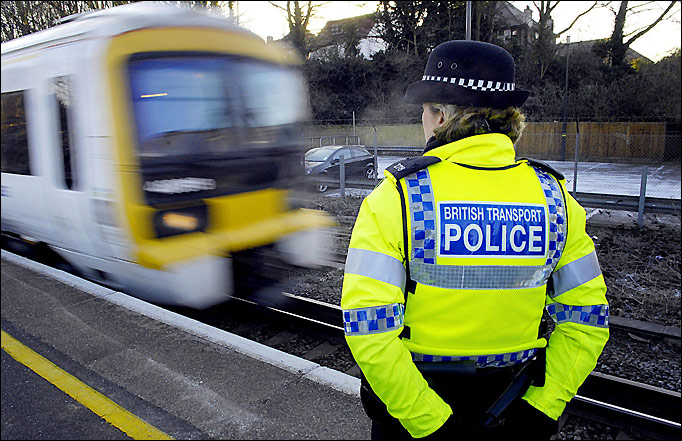
Arc Theatre On The Railways: A commission from British Transport Police and Network Rail: Blog 11


Good Morning!

I really enjoy the stretch of my work and job! Yesterday Nita and I went to a meeting with Teresa Bedziejewski, Tom Naugton from British Transport Police and Ria Guyatt from Network Rail. We met in a quirky little Camden coffee shop just down the road from BTP HQ. This comfortable cafe with great coffee  offers a back up meeting place for BTP officers and guests. The owner knows them all really well, and we were warmly welcomed!

We have been working closely in partnership with BTP since 2009 when we stumbled across each other at a performance of our play Boy X  (see a short trailer here)  http://youtu.be/iuOuIl5jKJE. 

DCS Martin Fry was the first to see the potential of working with us to bring more performances of Boy X to schools across the UK. And so began a great working partnership. BTP have sponsored performances and commissioned three new plays since then, Pact, Girl E and now Mullered by Clifford Oliver and have committed significant funding to do so. Thanks to this we have been able to showcase and tour the work to young people nationally and to encourage other partners to get involved in a number of ways, from funding to leading workshops together.

The shows have travelled across the UK from London to Cardiff, Liverpool, Manchester, Swansea, Birmingham and other cities.  

Working with theatre was a brand new departure for BTP and has been championed from the top of the organisation by ACC Alan Pacey. 

You may ask why on earth would the BTP want to engage with theatre?

We have a considerable history of workig with many Police Forces in the UK over the past 15 years, making work about a range of tough themes and prizing our way into the most extraordinary of non-theatre spaces. Most recently performances on the concourse and underneath the arches at Waterloo Station,  to posh hotels, Google's HQ, Shell UK HQ, Prisons, Schools and many others.

I love the serendipity of it all, the accident of meeting. BTP just seem to get and love the idea that stories told through compelling dramas break through the barriers they necessarily experience daily in the nature of their work. Kids turn off to lectures about the dangers of getting involved with gangs, and often struggle to understand that carrying a knife puts them more at risk of it being used against them. 

Some of you may know that we have worked for many years with Neville Lawrence, the father of Stephen Lawrence, two of whose killers were finally brought to justice this time last year. Spending a great deal of time with Neville since 2000, opened up to us the dreadful space in which a parent lives when their child has been murdered, and the oppressive life they are forced to live, not least when they are subject to bodged justice and discrimination on the basis of race. It was an exhausting fight for justice for the Lawrence family, and it is not over for them.


In this time of deep public sector cuts, cutting off the lifeblood of much work like ours, the BTP are a little more protected. They do receive money from the public purse but are largely funded by the Rail Network operators to deliver policing on the railways nationally.

The partnership has been marked by a genuine equality from the beginning. Its been a huge learning curve for all of us. On the surface plays set on trains and stations about violence and anti-social behaviour may seem far removed from the richness of Hamlet or even a panto!  

However, scratch the surface a little more and underneath you find of course that the station and the train are simply other settings in which life plays out its many narratives. Relationships are not just played out in the privacy of the home, but in public places every day. It doesn't take much of a detective's nose to sniff out couples breaking up at airports, children leaving to travel from stations. Our lives play out in these spaces all the time. Indeed stations and airports are probably the most charged of places. Of course it may not seem like that,and it probably isn't for most people on a daily basis as they commute to work. But of course it could become so at any moment.

The tragic murder of Sofyen Belamouadden by 12 young people at Victoria Station in 2010 is one example of the extremes of violence that happen in the broad daylight in front of thousands of commuters.

And so when the BTP want to get into a conversation with young people about what this is and why, it behoves them to find a way of listening and opening up that dialogue in a safe space. We do that for and with them.

Its never about messages for us. We do not do propaganda and never would. That's what our commissioners understand about us.  What we do is tell authentic stories and through compelling characters, we open the possibility of  a space for a real conversation. That's it really. We cannot control the outcomes of those conversations and the learning that comes from them, but we can create a precious space where they can happen. The listening is almost always wonderful and the shared insights that young people in our audiences give to each other are in themselves the way the learning happens.

So in these tough times to have a partner like BTP on a shared journey is particularly special.

Last year they commissioned Mullered by Clifford Oliver and its an unusual take on the way people behave in public spaces around the railways. Olly chose to shine an historical light on this one and uses the story of Thomas Briggs, the first person to be murdered on the railway in 1864 by a man called Franz Muller who was eventually hanged for it. The story is fascinating and offers an unusual backdrop for a group of contemporary young people to play out their other story.

The show goes out across London in March and April and for the first time we are thrilled that thanks to their relationship with BTP  Network Rail has come on as a funding partner. They are hugely supportive and hands on in making the show available to schools in  East Anglia and Kent.

So the project plan is now fully in place and we will be auditioning in early February. 

Oh yes I should also mention that by coincidence the Amy Green's (Cinderella) Dad Paul works for BTP!


I'll let you know more updates.

No Director's suggested exercise today - except to say I highly recommend the Coffee House on Camden Road! 

STOP PRESS.WE NEED YOUR FEEDBACK ON CINDERELLA:


Arc Production of the 2012 Broadway Panto: 


Cinderella: Audience Survey


Closes January 22nd.


To all my readers who came to or saw a streamed performance of the 2012 Barking panto Cinderella, we would be really grateful if you could spare a few minutes to complete our audience survey. The Broadway Theatre has already conducted an excellent survey of its own. I would like to capture any comments and feedback from anyone who might not have completed a Broadway survey. We are putting together our evaluation report from the panto project to present to the Council and College - our co-producers in this and so your time and feedback will be really helpful! The more feedback the better!


Thank you in advance

Best wishes
Carole

Link is
http://www.surveymonkey.com/s/WT7S5B6